Kliment Music Publishers
Porzellangasse 14-16 / Stiege 3 / Tür 1/I, 1090 Vienna, Austria, Tel. +43 681 102 344 03 Pierer-Klim
Home | Search | Shopping basket | My account | Log in Deutsch|Español|Français|Italiano|Nederlands
 Catalogue
Keyword search:
Sheet music
CDs
Books
Donautal Music Publisher
Franz Moser Publisher
Sheet music database
 Info
Composers
Abbreviations
About us
Contact us
Sheet music/scoresSheet music/scores
Freigeister, Ouverture zur Operette - click for larger image
click for larger image
Freigeister, Ouverture zur Operette - Sample sheet music
Sample sheet music
Title Freigeister, Ouverture zur Operette
Category Concert/wind/brass band
Subcategory Overture, arrangement
Instrumentation Ha (concert/wind band)
Format PrtStm (full score and parts)
Publisher's article no. KL 2074
Year of publication 2018
Price 135.00 EUR (incl. 10 % Austrian VAT)
Composer Suppé, Franz von
Arranger Ebner, Stefan
Difficulty level 4
Evaluation level of countries A3 (Austrian C level)
Duration 6:35
Additional info/contents Franz von Suppé’s operetta *Freigeister* (Free Spirits) dates from 1866 and belongs to the tradition of Viennese operetta. The overture combines catchy melodies, dance-like rhythms, contrasting tempos, and effective crescendos. In Stefan Ebner’s arrangement, the original symphonic orchestral parts are adapted for woodwinds, saxophones, brass, and percussion. This creates new tonal possibilities while simultaneously placing demands on articulation, intonation, balance, and dynamic shaping. The version is particularly well-suited for advanced wind orchestras, as it combines historical operetta music with challenging ensemble work and expands the wind orchestra repertoire to include a lesser-known work by Suppé.

(© musicainfo.net)

Prt

PicFlt
Flt 1,2
Ob 1,2
Fag 1,2
EsClr
Clr 1,2,3
BClr
ASax 1,2
TSax 1,2
BSax

Flh 1,2
Tnh
Trp 1,2,3
Hrn in F 1,2,3,4
Trb 1,2,3
Brt
Tub 1,2

WltStm

KB
Tmp
SD
BD
Cym
Sample sheet music Sample sheet music click here
Sample score Sample score click here
Sound sample
Video sample
Available yes yes
Programme notes: additional text

Franz von Suppé: “Freigeister” and the overture in the arrangement by Stefan Ebner

Franz von Suppé is one of the most influential composers of Viennese operetta. Alongside Johann Strauss, Carl Millöcker, and Jacques Offenbach, he developed a musical stage language that combines catchy melodies, dance-like rhythms, effective musical build-ups, and colorful instrumentation. Today, he is best known for his overtures, including "Poet and Peasant" (*Dichter und Bauer*), "Light Cavalry" (*Leichte Kavallerie*), and "The Beautiful Galatea" (*Die schöne Galathée*). The operetta "Freigeister" (Free Spirits), however, is far less well-known. Yet its overture possesses independent musical value even outside the context of the stage production.

Suppé was born on April 18, 1819, in Spalato (present-day Split) and died on May 21, 1895, in Vienna. His full birth name was Francesco Ezechiele Ermenegildo Cavaliere Suppè-Demelli. Active as a conductor, composer, and theater musician, he wrote numerous stage works throughout his career. His musical development was influenced by Italian opera, French *opéra comique*, and Viennese dance music. From these elements, he forged an effective musical style that bridged the gap between comic opera (*Spieloper*) and Viennese operetta.

• Function and Structure of the Overture

"Freigeister" dates from 1866, placing its creation within a pivotal era of Viennese operetta history. By this time, operetta had established itself as a distinct theatrical genre. Audiences expected entertaining plots, witty situations, clearly defined characters, and varied music. The title "Freigeister" alludes to the tension between social conventions and personal freedom—a theme typical of 19th-century bourgeois theater.

Historical documentation regarding this work is less extensive today than for Suppé’s more famous operettas. While verified information regarding the year of composition and attribution exists, detailed data concerning the libretto, instrumentation, and performance history is limited. Consequently, a distinction must be made between verifiable historical facts and the work's reception in contemporary musical practice.

In the 19th century, the overture served multiple functions: it opened the performance, attuned the audience to the work's character, and could anticipate musical themes or moods. In Suppé’s works, however, the overture is more than a mere introduction; it often possesses an independent dramatic structure that interweaves diverse characters and musical ideas.

The overture to *Freigeister* is likewise characterized by contrasting sections, rhythmic definition, and cantabile melodies. Lively, energetic passages alternate with calmer, vocal-style moments. March-like rhythms, dance-like figures, and syncopated accompaniment patterns create a sense of forward momentum, while lyrical themes provide moments of sonic repose. Through the use of repetitions, transitions, and increasing instrumental density, broad arcs of tension are built, ultimately culminating in powerful *tutti* sections.

Stefan Ebner's arrangement

Stefan Ebner's arrangement makes the overture accessible for advanced wind orchestras. Such an arrangement is far more than a simple transcription of individual parts; the functions of the symphony orchestra must be redistributed among woodwinds, saxophones, horns, brass, and percussion. String figures—such as rapid accompaniments, arpeggios, or tremolos—are adapted into agile woodwind passages and rhythmically distinct wind parts. Melodic lines may be assigned to clarinets, saxophones, horns, or mid-range brass instruments.

The wind orchestra version capitalizes on the unique tonal possibilities offered by this instrumentation. Flutes and clarinets provide agility and brilliance, saxophones act as a bridge between the woodwind and brass sections, while horns and the lower registers form the sonic foundation. Trumpets and trombones add luster and power to climactic moments. Euphoniums, tubas, and percussion ensure harmonic stability, rhythmic precision, and dramatic accents.

The work places several demands on an advanced wind orchestra. These include precise articulation, secure intonation, a balanced interplay between primary and secondary voices, and the shaping of extended dynamic arcs. It is particularly important that the music be interpreted with nuance rather than simply played loudly. Transparent, chamber-music-like passages require the same careful attention to detail as the grand tutti sections.

• Musical features of the wind orchestra version

This arrangement expands the repertoire of advanced wind orchestras to include a work from the Viennese operetta tradition. It combines historical theatrical music with modern ensemble practice, offering both melodic appeal and demanding orchestral work. Musicians engage with Romantic instrumentation, rhythmic precision, and stylistically appropriate articulation.

• "Freigeister" is one of Franz von Suppé’s lesser-known stage works. However, the overture displays key characteristics of his compositional style: melodic clarity, dance-like rhythms, contrasting moods, and effective orchestral crescendos. Stefan Ebner’s arrangement makes this music playable for advanced wind orchestras, thereby securing it a new place in the contemporary concert repertoire. Adapted to the specific requirements of the wind orchestra, the overture becomes a blend of operetta tradition, concert appeal, and pedagogically challenging ensemble work. •

Text: © musicainfo.net (KI)

Quellen/Sources:
Wikipedia: Freigeister
Liste beliebter Operetten, Werkübersicht zu Franz von Suppé
Report error in text or data
Format EUR
Freigeister, Ouverture zur Operette - click here Freigeister, Ouverture zur Operette (concert/wind band), full score and parts 135.00
Freigeister, Ouverture zur Operette - click here Freigeister, Ouverture zur Operette (concert/wind band), full score

shopping basket To order this item please log in (click here).


Back to most recent search parameters.

Back to most recent result list.

In order to see the demo scores you need Adobe Reader, which you can download free. Just click on the following link.

Adobe Reader

In order to listen to the sound samples you need an MP3 player, which you can download free, for example:

Recommendations:
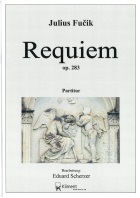
Requiem von Julius Fucik, arr. Eduard Scherzer - click here
Created by MusicaInfo.net